Archive: April 16, 2026

PDF

discrete mathematics with applications 5th edition pdf

Discrete Mathematics with Applications 5th Edition: A Comprehensive Guide

Susanna Epp’s widely-used textbook offers a gentle introduction to essential concepts, alongside readily available PDF solutions and a robust student solutions manual․

Overview of Susanna Epp’s 5th Edition

Susanna Epp’s “Discrete Mathematics with Applications,” 5th Edition, remains a cornerstone text for introducing students to the foundational principles of the field․ This edition builds upon the strengths of previous versions, offering a clear and accessible presentation of complex topics․ A key feature is its emphasis on mathematical reasoning and proof techniques, crucial for success in computer science and related disciplines․

The textbook is designed to be approachable, even for students with limited prior mathematical experience․ It provides numerous examples, exercises, and applications to reinforce understanding․ Furthermore, the availability of a PDF version and accompanying student solutions manual significantly enhances the learning experience, allowing for self-study and problem-solving practice․ The 5th edition continues to be favored for its gentler pace compared to texts like MIT Math for CS, while still covering the same core material․

Importance of Discrete Mathematics in Computer Science

Discrete mathematics forms the theoretical underpinnings of computer science, providing the essential tools for analyzing algorithms, designing efficient data structures, and ensuring software correctness․ Concepts like logic, set theory, functions, and relations – thoroughly covered in Susanna Epp’s 5th Edition – are fundamental to areas like algorithm analysis and cryptography․

Understanding discrete mathematical principles is crucial for developing robust and reliable software systems․ The ability to reason logically and construct formal proofs is paramount in verifying program behavior․ Access to resources like the PDF version of the textbook and its student solutions manual allows computer science students to solidify these vital skills․ Without a strong foundation in discrete mathematics, tackling advanced computer science topics becomes significantly more challenging, hindering innovation and problem-solving capabilities․

Key Differences from Previous Editions

The 5th Edition of Susanna Epp’s Discrete Mathematics with Applications builds upon the strengths of prior editions while incorporating updated examples and exercises relevant to contemporary computer science․ While a direct comparison requires examining the text itself, user feedback suggests a continued emphasis on clarity and accessibility, making it gentler than alternatives like MIT Math for CS․

Improvements likely include refined explanations of core concepts and potentially new applications demonstrating the practical relevance of discrete mathematics․ The availability of a PDF version alongside the student solutions manual enhances learning flexibility․ Though specific changes require detailed review, the 5th edition aims to provide a more comprehensive and engaging learning experience, solidifying its position as a leading textbook in the field․

Core Concepts Covered in the Textbook

Epp’s text thoroughly explores logic and proofs, set theory, functions and relations, and counting principles, aided by a PDF resource․

Logic and Proofs

Susanna Epp’s 5th edition dedicates significant attention to the foundational principles of logic and proofs, crucial for developing rigorous mathematical reasoning skills․ Students learn to construct and analyze arguments using propositional and predicate logic, mastering techniques like truth tables and logical equivalences․

The text emphasizes various proof methods, including direct proof, proof by contrapositive, proof by contradiction, and mathematical induction – all essential tools for computer science․ A PDF version of the textbook, alongside the student solutions manual, provides ample practice problems and step-by-step solutions to reinforce understanding․

Furthermore, the book connects these logical concepts to real-world applications, preparing students for advanced coursework and problem-solving in diverse fields․ Sections 1․2 and 1․3 specifically bridge the gap between discrete mathematics and prior calculus knowledge․

Set Theory

Susanna Epp’s 5th edition provides a thorough exploration of set theory, a cornerstone of discrete mathematics․ Students delve into fundamental concepts like set operations (union, intersection, complement), power sets, and Cartesian products, building a strong foundation for more advanced topics․ The textbook emphasizes understanding sets as collections of objects and utilizes notation effectively․

The PDF version of “Discrete Mathematics with Applications” and accompanying student solutions manual offer numerous examples and exercises to solidify comprehension․ Students learn to apply set theory to solve problems in various contexts, including computer science and logic․

The text also covers relations and functions built upon set theory, preparing students for algorithm analysis and database management․ Detailed solutions are available to aid in mastering these essential mathematical tools․

Functions and Relations

Susanna Epp’s “Discrete Mathematics with Applications,” 5th edition, meticulously covers functions and relations, crucial for understanding computer science principles․ The PDF version presents detailed explanations of function types – injective, surjective, and bijective – alongside composite functions and inverse functions․ Students learn to represent relations using matrices and digraphs, enhancing their analytical skills․

The textbook emphasizes the connection between functions and sets, building upon previously learned concepts․ The accompanying student solutions manual provides step-by-step solutions to numerous problems, aiding comprehension and problem-solving abilities․

These concepts are foundational for algorithm design and database structures, preparing students for advanced coursework․ The text’s clarity and comprehensive examples make mastering these topics accessible․

Combinatorics

Susanna Epp’s “Discrete Mathematics with Applications,” 5th edition, dedicates significant attention to combinatorics, the art of counting․ The PDF resource thoroughly explains fundamental principles like the addition principle, multiplication principle, permutations, and combinations․ Students learn to solve complex counting problems, essential for probability and algorithm analysis․

The textbook provides numerous examples illustrating how to apply these principles to real-world scenarios․ The student solutions manual offers detailed walkthroughs of challenging exercises, reinforcing understanding and building confidence․ Binomial coefficients and the binomial theorem are also covered extensively․

Mastering combinatorics is vital for computer science, particularly in areas like data structures and algorithm efficiency․ Epp’s clear explanations and practice problems make this crucial topic accessible․

Applications of Discrete Mathematics

Discrete Mathematics, with its PDF solutions, underpins computer science, algorithm analysis, cryptography, and database management – vital fields for modern technology․

Computer Science Fundamentals

Discrete Mathematics with Applications, particularly its accessible 5th Edition and accompanying PDF resources, forms a crucial bedrock for computer science education․ The text meticulously covers logic, proofs, set theory, functions, and relations – concepts directly applicable to programming and algorithm design․ Students utilizing the student solutions manual gain proficiency in problem-solving, essential for tackling complex computational challenges․

Understanding these fundamentals allows for a deeper grasp of data structures, algorithm analysis, and the theoretical underpinnings of computation․ The book’s gentle approach, often contrasted favorably with texts like MIT Math for CS, makes it ideal for students building a strong foundation․ Access to expert-verified solutions further solidifies comprehension and prepares students for advanced coursework and real-world applications within the field․

Algorithm Analysis

Discrete Mathematics with Applications, 5th Edition, and its associated PDF materials, provide the necessary tools for rigorous algorithm analysis․ Concepts like combinatorics and recurrence relations, thoroughly explored within the text and supported by the student solutions manual, are fundamental to determining an algorithm’s efficiency and scalability․ Students learn to analyze time and space complexity, crucial skills for software development․

The book’s emphasis on mathematical reasoning equips learners to prove algorithm correctness and identify potential bottlenecks․ Utilizing the expert-verified solutions allows for practice in applying these techniques to various algorithmic problems․ This foundation is vital for designing efficient and effective solutions, moving beyond simply writing code to understanding its underlying performance characteristics, a skill highly valued in computer science․

Cryptography

Discrete Mathematics with Applications, 5th Edition, and its accompanying PDF resources, lay a strong mathematical groundwork for understanding modern cryptography․ The text delves into essential concepts like modular arithmetic, prime numbers, and number theory – all cornerstones of secure communication․ Students gain the ability to analyze cryptographic algorithms and appreciate their underlying principles, aided by the detailed student solutions manual․

The book’s coverage of logic and proofs is particularly relevant, enabling learners to assess the security of cryptographic systems․ Access to expert-verified solutions provides practical experience in applying these concepts to real-world cryptographic problems․ This knowledge is increasingly important in a world reliant on secure data transmission and protection, making this a vital application of discrete mathematics․

Database Management

Discrete Mathematics with Applications, 5th Edition, and its accessible PDF format, provides crucial foundations for effective database management․ The text’s exploration of set theory, relations, and functions directly translates to understanding database structures and operations․ Students learn to model data, define relationships between entities, and perform queries efficiently, supported by the comprehensive student solutions manual․

Concepts like relational algebra and database normalization are illuminated through clear explanations and practical examples․ The availability of expert-verified solutions allows for hands-on practice in applying discrete mathematical principles to database design and implementation․ This knowledge is essential for anyone involved in building, maintaining, or utilizing modern database systems, making it a key application area․

Resources for Learning and Problem Solving

PDF access, student solutions manuals, and instructor’s solutions manuals offer comprehensive support, alongside online tutorials, aiding mastery of Epp’s material․

Student Solutions Manual

The Student Solutions Manual for Susanna Epp’s Discrete Mathematics with Applications, 5th Edition, is an invaluable resource designed to bolster student understanding and problem-solving capabilities․ This manual provides meticulously detailed, step-by-step solutions to a wide array of exercises found within the textbook, enabling students to check their work, identify areas needing improvement, and solidify their grasp of core concepts․

Specifically, it offers complete solutions, allowing students to learn from detailed explanations rather than simply obtaining answers․ Access to a PDF version of this manual is often sought after, providing convenient digital access for study․ It complements the textbook by offering alternative approaches and clarifying complex methodologies․ Furthermore, the manual often includes a study guide component, reinforcing key definitions and theorems․ It’s a crucial tool for independent learning and exam preparation, fostering confidence and success in discrete mathematics․

Instructor’s Solutions Manual

The Instructor’s Solutions Manual for Epp’s Discrete Mathematics with Applications, 5th Edition, is a vital resource for educators․ It provides comprehensive, worked-out solutions to all exercises and problems presented in the textbook, streamlining grading and lesson preparation․ Often available as a PDF, it allows instructors quick and easy access to detailed answers, saving valuable time․

This manual isn’t merely an answer key; it showcases various solution approaches, aiding instructors in explaining concepts effectively to students․ It supports the teaching process by offering insights into potential student difficulties and common errors․ For example, the manual for Grimaldi’s text is frequently referenced․ It ensures accuracy and consistency in evaluating student work, and facilitates a deeper understanding of the material for both instructors and learners․ It’s an essential companion for effective course delivery․

Online Resources and Tutorials

Supplementing Epp’s Discrete Mathematics with Applications, 5th Edition, a wealth of online resources and tutorials are available to enhance learning․ While a direct official PDF of all resources isn’t always centralized, numerous platforms offer support․ These include expert-verified solutions to homework problems, often accessible through subscription services․ Many websites provide step-by-step walkthroughs of challenging exercises, mirroring the detail found in the student solutions manual․

Furthermore, independent educators and academic institutions frequently create supplementary materials, such as video lectures and practice quizzes․ These resources cater to diverse learning styles and provide alternative explanations of complex concepts․ Searching for specific chapter topics alongside “tutorial” or “solution” yields valuable results, aiding comprehension and problem-solving skills․ These digital aids complement the textbook effectively․

Study Guides and Alternate Explanations

Alongside Susanna Epp’s Discrete Mathematics with Applications, 5th Edition, and its associated PDF solutions, dedicated study guides offer crucial support․ These guides frequently present alternate explanations for challenging concepts, catering to diverse learning preferences․ The student solutions manual itself functions as a detailed study aid, walking students through problem-solving processes step-by-step․

Several resources provide expanded explanations and additional examples beyond the textbook’s scope․ These materials often focus on clarifying difficult proofs or illustrating abstract ideas with concrete applications․ Independent online platforms and academic websites contribute to this ecosystem, offering varied perspectives․ Utilizing these supplementary resources alongside the core textbook and available PDF materials significantly enhances understanding and mastery of the subject matter․

Specific Chapters and Topics

Epp’s text systematically covers logic, set theory, functions, and counting principles, with corresponding PDF solutions available for each chapter’s exercises․

Chapter 1: Logic and Mathematical Reasoning

Chapter 1 of Susanna Epp’s textbook lays a foundational groundwork in logic and mathematical reasoning, crucial for subsequent topics․ It introduces propositional logic, including statements, connectives (and, or, not, if…then, if and only if), and truth tables․ Students learn to construct and analyze compound statements, understanding logical equivalence and precedence․

The chapter progresses to predicate logic, quantifying variables with universal and existential quantifiers․ Emphasis is placed on translating English sentences into symbolic logic and vice versa, a skill vital for problem-solving․ Furthermore, it delves into rules of inference, enabling the derivation of valid conclusions from given premises․

PDF resources and the student solutions manual provide detailed walkthroughs of exercises, reinforcing these concepts․ Understanding these principles is essential, as they underpin the entire field of discrete mathematics and its applications․

Chapter 2: Basic Set Theory

Chapter 2 of Susanna Epp’s text comprehensively covers basic set theory, a cornerstone of discrete mathematics․ It begins with defining sets, elements, and various methods of representing them․ Students explore subset relationships, including proper and improper subsets, and learn to perform fundamental set operations like union, intersection, and complement․

Venn diagrams are extensively utilized to visualize set relationships and facilitate problem-solving․ The chapter introduces power sets, Cartesian products, and partitioning of sets, expanding the understanding of set structures․ Emphasis is placed on proving set identities using algebraic manipulation and membership tables․

Access to PDF versions and the accompanying student solutions manual offers detailed examples and step-by-step solutions, solidifying comprehension․ This foundational knowledge is crucial for understanding functions, relations, and combinatorics later in the book․

Chapter 3: Functions and Relations

Chapter 3 delves into functions and relations, building upon the set theory foundation․ Susanna Epp’s approach clearly defines functions, their properties (injective, surjective, bijective), and composition․ Students learn to represent functions using various notations, including formulas, tables, and graphs․

Relations are explored in detail, covering types like reflexive, symmetric, and transitive relations․ Equivalence relations and partial orderings are introduced, alongside their applications․ The chapter emphasizes the connection between functions and relations, demonstrating how a relation can define a function and vice versa․

The availability of a PDF version and the student solutions manual provides ample practice problems and detailed solutions․ Mastering these concepts is vital for algorithm analysis and computer science applications discussed later․

Chapter 4: Counting Principles

Chapter 4 focuses on counting principles – a cornerstone of discrete mathematics and crucial for algorithm analysis․ Susanna Epp systematically introduces the fundamental counting rule, permutations, and combinations, providing clear explanations and illustrative examples․ Students learn to apply these techniques to solve a wide range of combinatorial problems․

The chapter covers the inclusion-exclusion principle and the pigeonhole principle, expanding the toolkit for tackling complex counting scenarios․ Understanding these principles is essential for probability calculations and analyzing the efficiency of algorithms․ The PDF format allows for easy access to definitions and theorems․

The accompanying student solutions manual offers step-by-step solutions, reinforcing comprehension and problem-solving skills․ This chapter prepares students for advanced topics in computer science and cryptography․

Comparison with Other Discrete Mathematics Texts

Epp’s text is considered gentler than MIT Math for CS, covering similar material, while Rosen and Grimaldi offer alternative approaches and PDF solutions․

Rosen Discrete Mathematics 5th Edition

Kenneth Rosen’s Discrete Mathematics and Its Applications, 5th Edition, presents a comprehensive and rigorous treatment of the subject, often favored for its breadth and depth․ While both texts cover foundational topics like logic, set theory, functions, and combinatorics, Rosen tends to be more abstract and theoretically focused compared to Epp’s more application-driven approach․

Users seeking readily available solutions may find numerous online resources and a dedicated solutions manual for Rosen’s edition, including potential PDF versions․ However, the complexity of Rosen’s problems often necessitates a stronger mathematical background․ Epp’s text, conversely, is often praised for its accessibility, making it a preferred choice for introductory courses and students needing a gentler learning curve․ Both books offer valuable perspectives, but cater to different learning styles and levels of mathematical preparedness․

Grimaldi’s Discrete and Combinatorial Mathematics

Ralph P․ Grimaldi’s Discrete and Combinatorial Mathematics, 5th Edition, provides a robust and detailed exploration of the field, often considered a more advanced alternative to Epp’s text․ It delves deeply into combinatorial analysis, graph theory, and other specialized areas․ An instructor’s solutions manual exists for this edition, offering detailed walkthroughs of problems, though finding a complete student PDF solution manual can be more challenging;

Compared to Epp, Grimaldi’s approach is generally more mathematically rigorous and less focused on immediate applications․ While Epp prioritizes accessibility, Grimaldi emphasizes a thorough understanding of underlying principles․ Both texts are valuable resources, but Grimaldi’s is better suited for students with a stronger mathematical foundation or those pursuing more advanced studies in discrete mathematics․

MIT Math for Computer Science

MIT’s 6․042J / 18․062J course, “Mathematics for Computer Science,” presents a significantly more theoretical and fast-paced approach to discrete mathematics than Susanna Epp’s Discrete Mathematics with Applications․ While lecture notes and problem sets are publicly available online, a comprehensive student PDF solution manual mirroring Epp’s detailed solutions is not readily accessible․ The MIT course emphasizes proofs and mathematical reasoning, demanding a high level of abstraction;

Compared to Epp’s gentler introduction, MIT’s curriculum is considerably more challenging, often requiring a strong calculus background․ Epp serves as a good preparatory text for students anticipating the rigor of MIT’s approach․ Resources for MIT’s course are freely available, but self-study requires substantial dedication and mathematical maturity․

PDF

habits of a successful beginner band musician pdf

Article Plan: Habits of a Successful Beginner Band Musician (PDF Focus)

This guide details essential practices for new band members‚ focusing on consistent effort‚ technical skills‚ and musical understanding – all documented within a helpful PDF resource.

Embarking on a musical journey with a band is incredibly exciting! This guide is designed for the enthusiastic beginner‚ eager to learn and contribute. Success isn’t solely about natural talent; it’s cultivated through dedicated habits and a structured approach. We’ll explore key practices‚ from daily routines to understanding music theory‚ all compiled into a practical PDF resource.

This PDF will serve as your companion‚ offering clear guidance and actionable steps. It’s about building a strong foundation‚ fostering a love for music‚ and achieving your potential within the ensemble. Let’s begin this rewarding adventure!

Understanding the Initial Challenges

Starting band presents unique hurdles for beginners. Performance anxiety is common – the fear of mistakes can be paralyzing. Balancing practice with school‚ work‚ and social life demands discipline. Our PDF addresses these challenges head-on‚ offering strategies for managing nerves and time effectively.

We’ll explore techniques to reframe anxiety as excitement and prioritize practice without sacrificing other commitments. Recognizing these obstacles is the first step towards overcoming them and building confidence as a musician;

Overcoming Performance Anxiety

Performance anxiety is a frequent obstacle for beginner musicians. Our PDF provides practical techniques to manage these nerves‚ including deep breathing exercises and positive self-talk. Visualization – mentally rehearsing a successful performance – is a powerful tool.

We’ll also discuss the importance of focusing on the music‚ not the audience‚ and accepting that mistakes are a natural part of the learning process. Small‚ incremental steps build confidence‚ reducing anxiety over time.

Balancing Practice with Other Commitments

Beginner musicians often struggle to fit practice into busy schedules. Our PDF emphasizes time management strategies‚ like scheduling dedicated practice slots and breaking down larger goals into smaller‚ achievable tasks. Prioritization is key; identify non-essential activities that can be reduced.

We’ll explore the concept of “micro-practice” – short‚ focused sessions throughout the day – and the importance of communicating commitments to family and friends for support.

Core Practice Habits

Establishing strong practice habits is fundamental for beginner band musicians. This section of our PDF focuses on consistency and quality over quantity. We advocate for daily practice‚ even if brief‚ utilizing the “30-Minute Rule” – dedicating at least half an hour each day to focused musical work.

The PDF will differentiate between focused practice – addressing specific weaknesses – and rote repetition‚ emphasizing mindful engagement with the music for optimal progress.

Consistent Daily Practice – The 30-Minute Rule

Our PDF guide champions the “30-Minute Rule” for beginner band musicians. This isn’t about lengthy‚ grueling sessions‚ but consistent‚ manageable daily practice. Even a short‚ focused burst each day yields better results than infrequent‚ extended periods.

The PDF will detail how to structure these 30 minutes – warm-ups‚ technique work‚ and repertoire practice – maximizing efficiency and preventing burnout. Consistency builds muscle memory and reinforces learning.

Focused Practice vs. Rote Repetition

The PDF will emphasize the difference between mindless repetition and focused practice. Simply playing a passage repeatedly isn’t effective if errors aren’t addressed. Focused practice involves identifying specific challenges – a tricky rhythm‚ a difficult fingering – and working on them deliberately and slowly.

Our guide provides exercises to break down complex sections‚ ensuring each element is mastered before reassembling the whole. This targeted approach accelerates progress and builds a stronger musical foundation.

Technical Skill Development

The PDF will dedicate a section to fundamental technical skills‚ crucial for any beginner band musician. This includes detailed guidance on proper instrument maintenance – cleaning‚ storage‚ and basic repairs – to ensure longevity and optimal performance.

Furthermore‚ we’ll outline specific embouchure and technique exercises tailored to various instruments‚ promoting correct posture‚ breath control‚ and efficient playing. These exercises will be presented with clear diagrams and instructions.

Proper Instrument Maintenance

Our PDF guide emphasizes regular instrument care as a cornerstone of success. Detailed instructions will cover daily cleaning routines – swabbing woodwinds‚ wiping brass instruments – to prevent buildup and ensure hygienic playing.

We’ll also address proper storage techniques‚ protecting instruments from damage and environmental factors. Guidance on basic repairs‚ like tightening loose screws or replacing reeds‚ will empower beginners to address minor issues independently‚ extending instrument lifespan.

Embouchure/Technique Exercises (Specific to Instrument)

The PDF will feature tailored exercises for each instrument family‚ focusing on developing a strong embouchure – the oral configuration for producing sound. For brass players‚ this includes buzzing exercises and lip slurs. Woodwind players will find long-tone exercises and articulation studies.

Percussionists receive rudimental practice routines. These exercises‚ presented with clear diagrams and audio examples‚ will build muscle memory‚ improve tone quality‚ and enhance overall technical proficiency‚ laying a solid foundation for musical expression.

Music Theory Fundamentals

The PDF guide will dedicate a section to essential music theory concepts‚ demystifying the language of music for beginners. It will cover reading music‚ explaining both rhythm notation and pitch identification on the staff. Understanding key signatures and scales is crucial‚ so these will be explained with visual aids.

The goal is to empower students to not just play notes‚ but to comprehend the underlying structure of the music‚ fostering a deeper connection and improving their ability to learn new pieces quickly.

Reading Music – Rhythm and Pitch

The PDF will break down music notation into manageable parts‚ starting with rhythm. It will explain note values (whole‚ half‚ quarter‚ etc.) and time signatures‚ using clear diagrams. Pitch will be covered alongside‚ relating notes on the staff to instrument fingerings.

Exercises will focus on clapping rhythms and identifying notes‚ building a solid foundation. The guide will emphasize consistent practice to internalize these concepts‚ leading to fluent reading skills.

Understanding Key Signatures and Scales

The PDF will demystify key signatures‚ explaining sharps and flats and their impact on pitch. It will visually represent common key signatures‚ linking them to corresponding major and minor scales. Scale diagrams for various instruments will be included‚ aiding finger placement and memorization.

Exercises will involve playing scales in different keys‚ reinforcing understanding and building technique. The guide will stress the importance of recognizing key changes within a piece of music.

Ear Training for Beginners

The PDF will incorporate ear training exercises‚ crucial for musical development. Interval recognition will be introduced‚ starting with simple intervals like major and minor seconds‚ then progressing to more complex ones. Audio examples will accompany each exercise‚ allowing students to hear and identify intervals.

Chord identification practice will follow‚ focusing on major‚ minor‚ and dominant seventh chords. Interactive quizzes within the PDF will test and reinforce learning‚ building a strong musical foundation.

Interval Recognition Exercises

The PDF’s interval exercises begin with ascending and descending major and minor seconds‚ presented both visually on a staff and aurally through audio clips. Students will identify these intervals repeatedly‚ building aural memory. Progressive exercises introduce perfect fourths and fifths‚ then tritones‚ increasing complexity.

Each exercise includes answer keys for self-assessment; Interactive elements within the PDF allow students to record their responses and track improvement‚ fostering independent learning and solidifying interval recognition skills.

Chord Identification Practice

The PDF features chord identification exercises starting with major‚ minor‚ diminished‚ and augmented triads‚ presented in root position. Students will listen to chord progressions and identify each chord by ear‚ utilizing provided answer sheets for verification. Visual representations of each chord on the staff accompany the audio examples.

Later exercises introduce seventh chords and inversions‚ increasing the challenge. Interactive quizzes within the PDF provide immediate feedback‚ reinforcing learning and building confidence in chord recognition abilities.

Rehearsal Etiquette and Collaboration

The PDF dedicates a section to proper rehearsal behavior‚ emphasizing punctuality‚ preparedness with music and instruments‚ and respectful interaction with peers and the director. It outlines the importance of active listening – not just hearing your part‚ but blending with the ensemble;

Specific guidance is given on constructive feedback‚ avoiding disruptive comments‚ and maintaining a positive attitude. Scenarios are presented to illustrate effective communication and collaborative problem-solving within a band setting.

Active Listening During Rehearsals

The PDF stresses that active listening transcends simply playing your assigned notes; it’s about truly hearing the entire ensemble. Exercises are included to train beginners to identify balance issues‚ intonation problems‚ and rhythmic inaccuracies within the band’s sound.

It encourages students to listen not only to their section but also to other instrumental parts‚ fostering a holistic understanding of the music. The guide provides prompts for self-assessment: “Can you hear the bass line? Is your dynamic level appropriate?”

Respectful Communication with Bandmates

The PDF emphasizes building a positive band environment through considerate interactions. It outlines appropriate ways to offer constructive criticism – focusing on musical elements‚ not personal shortcomings – and accepting feedback gracefully. Role-playing scenarios demonstrate effective communication techniques.

Students are guided to use “I” statements (e.g.‚ “I’m having trouble hearing the melody”) rather than accusatory language. The resource highlights the importance of valuing diverse perspectives and fostering a collaborative spirit within the ensemble.

Performance Preparation

The PDF provides a structured approach to concert readiness. It details effective memorization strategies – chunking music into smaller sections and utilizing spaced repetition – when appropriate for the piece. Checklists ensure all aspects are covered‚ from instrument readiness to uniform checks.

Emphasis is placed on building stage confidence through visualization exercises and positive self-talk; The guide includes tips for managing pre-performance anxiety and projecting a poised presence during the performance itself‚ fostering a successful outcome.

Memorization Techniques (When Appropriate)

The PDF outlines strategies for memorizing music effectively‚ recognizing it isn’t always necessary. It advocates for “chunking” – breaking down pieces into manageable sections – and repeated‚ spaced practice of those segments. Visualizing the music on the page‚ and associating sections with landmarks‚ is encouraged.

The guide stresses understanding the musical structure over rote memorization. It suggests creating mental maps and focusing on harmonic progressions to aid recall‚ building a deeper connection with the music itself.

Stage Presence and Confidence Building

The PDF addresses performance anxiety‚ a common hurdle for beginners. It recommends practicing performance scenarios – simulating a concert setting – to build familiarity and reduce nervousness. Positive self-talk and visualization are highlighted as crucial tools for boosting confidence.

Maintaining good posture and eye contact are presented as key elements of stage presence. The guide encourages students to embrace imperfections and focus on conveying the joy of music‚ fostering a more relaxed and engaging performance.

Utilizing Technology & Resources

The PDF emphasizes leveraging digital tools for practice. It details the benefits of metronome and tuner apps – readily available on smartphones – for developing rhythm and intonation. Links to reputable online music learning platforms are included‚ offering supplemental lessons and exercises.

The guide suggests exploring interactive sheet music and virtual practice rooms. It also recommends utilizing online resources for instrument-specific tutorials and troubleshooting‚ empowering students to take ownership of their musical journey.

Metronome and Tuner Apps

The PDF highlights metronome apps as crucial for rhythmic accuracy. Beginners often struggle with consistent tempo; these apps provide a steady beat for focused practice. It recommends starting slowly and gradually increasing speed. Tuner apps are equally vital‚ ensuring accurate pitch and developing a keen ear.

The guide suggests exploring free and paid options‚ noting features like visual feedback and customizable tempos. Regular use of these tools builds a strong rhythmic foundation and improves overall musicality.

Online Music Learning Platforms

The PDF resource details the benefits of online platforms for supplemental learning. These platforms offer interactive lessons‚ sheet music access‚ and personalized feedback – enhancing the traditional band experience; It suggests exploring options like YouTube tutorials and subscription-based services.

The guide emphasizes choosing platforms aligned with the student’s instrument and skill level. These resources can accelerate progress‚ provide alternative explanations‚ and foster a deeper understanding of musical concepts.

Creating a Practice PDF Guide

The core of success lies in a well-structured PDF practice guide. This document should consolidate all essential habits – daily routines‚ technical exercises‚ and music theory concepts. It must be beginner-friendly‚ using clear language and avoiding jargon.

The PDF’s layout should be logical‚ with sections dedicated to each skill area. Incorporating visual aids like diagrams and images will significantly improve comprehension and engagement for young musicians.

Structuring the PDF for Beginner Musicians

Organize the PDF logically‚ beginning with foundational concepts. Dedicate sections to instrument care‚ embouchure exercises‚ and basic rhythm reading. Use a clear hierarchy with headings and subheadings for easy navigation. Prioritize simplicity; avoid overwhelming beginners with too much information at once.

Chunk content into manageable lessons‚ each focusing on a specific skill. Include space for notes and practice logs‚ encouraging active engagement. A visually appealing layout with consistent formatting enhances readability.

Incorporating Visual Aids (Diagrams‚ Images)

Enhance the PDF’s clarity with relevant visuals. Include diagrams illustrating proper posture‚ hand positions‚ and embouchure techniques for each instrument. Use images of music notation to demonstrate rhythm and pitch concepts. Visual representations of key signatures and scales aid comprehension.

Consider flowcharts outlining practice routines or troubleshooting common issues. High-quality images are crucial; ensure they are clear and well-labeled. Visuals break up text and cater to different learning styles‚ boosting engagement.

Goal Setting and Tracking Progress

Establish both short-term and long-term goals within the PDF. Short-term goals might focus on mastering a specific scale or passage‚ while long-term goals could involve preparing for a performance. A dedicated practice journal template is invaluable for tracking daily progress.

Encourage students to record practice time‚ challenges faced‚ and accomplishments. Regularly reviewing the journal helps identify areas needing improvement and reinforces positive habits. Celebrate milestones to maintain motivation.

Short-Term vs. Long-Term Goals

The PDF should clearly differentiate between short-term and long-term objectives. Short-term goals – achievable within a week – build immediate confidence‚ like mastering a tricky rhythm or improving tone quality. These are stepping stones to larger aspirations.

Long-term goals‚ spanning months‚ might involve preparing a solo piece or achieving a specific chair placement. Break down these larger goals into smaller‚ manageable short-term tasks. This prevents overwhelm and fosters consistent progress;

Using a Practice Journal

The PDF guide must emphasize the value of a practice journal. This isn’t merely logging hours; it’s detailed self-assessment. Record what was practiced‚ challenges encountered‚ and specific improvements made. Include metrics like tempo achieved or number of successful repetitions.

Regular journal review reveals patterns – areas needing more focus‚ effective practice strategies‚ and overall progress. This data-driven approach enhances efficiency and motivation‚ transforming practice from rote repetition to informed skill development.

Seeking Feedback and Mentorship

The PDF should strongly advocate for actively seeking constructive criticism. Beginner musicians benefit immensely from experienced guidance – a band director‚ private instructor‚ or even a more advanced peer. Regularly request feedback on technique‚ tone‚ and musicality.

Embrace criticism as a learning opportunity‚ not a discouragement. A mentor can provide personalized advice and identify areas for improvement often missed during self-practice. This collaborative approach accelerates progress and builds confidence.

Avoiding Common Beginner Mistakes

The PDF must address frequent pitfalls for novice musicians. These include improper posture‚ incorrect breathing techniques‚ and neglecting instrument maintenance – leading to frustration and hindered progress. Emphasize the importance of starting slowly and focusing on accuracy over speed.

Discourage comparing oneself to others; each musician’s journey is unique. Highlight the dangers of inconsistent practice and the value of a structured routine. Address the tendency to ignore discomfort or pain‚ advocating for seeking guidance immediately.

The Importance of Patience and Perseverance

The PDF should strongly emphasize that musical progress isn’t linear. Plateaus are inevitable‚ and frustration is a common experience for beginners. Cultivating patience is crucial; celebrate small victories and focus on consistent effort rather than immediate results.

Perseverance‚ even through challenging passages‚ is key. Encourage students to view mistakes as learning opportunities‚ not failures. Remind them that dedication and consistent practice will ultimately lead to improvement and a fulfilling musical journey.

Building a Repertoire

The PDF guide should advocate for a balanced repertoire selection. Start with simpler pieces that reinforce fundamental techniques‚ gradually introducing more complex arrangements. Encourage exploration of diverse musical styles – classical‚ jazz‚ pop – to broaden musical horizons and maintain engagement.

Suggest creating a “performance ready” folder alongside ongoing learning pieces. This builds confidence and provides tangible goals. Regularly revisiting previously learned pieces reinforces skills and demonstrates progress over time.

Understanding Band Dynamics

The PDF should emphasize the collaborative nature of band participation. Explain the importance of listening to other instrument sections‚ blending sound‚ and adjusting individual performance to achieve a unified ensemble. Highlight the role of each section – woodwinds‚ brass‚ percussion – and how they interrelate.

Include a section on non-verbal communication cues used during rehearsals and performances. Stress respectful interaction and constructive feedback amongst bandmates‚ fostering a positive learning environment.

Maintaining Motivation

The PDF must address the inevitable dips in enthusiasm. Suggest setting achievable short-term goals‚ like mastering a specific passage‚ and celebrating small victories. Encourage students to record themselves playing to track progress and identify areas for improvement.

Include inspirational quotes from famous musicians and emphasize the joy of music-making. Remind beginners that plateaus are normal and perseverance is key to long-term success‚ fostering a growth mindset.

Dealing with Plateaus in Progress

The PDF should normalize plateaus‚ explaining they’re a common part of learning. Advise students to revisit fundamental exercises – embouchure work‚ scales – to reinforce basics. Suggest seeking feedback from instructors or peers for fresh perspectives.

Introduce varied practice techniques to break monotony‚ like playing along with recordings or learning a new‚ simpler piece. Emphasize patience and consistent effort‚ reminding students that progress isn’t always linear.

The Role of a Band Director/Instructor

The PDF should highlight the instructor’s crucial role in fostering good habits. Directors provide personalized feedback on technique‚ musicality‚ and practice strategies. They establish clear expectations for rehearsal etiquette and performance standards;

Instructors offer guidance on instrument maintenance and troubleshooting common issues. A supportive director cultivates a positive learning environment‚ encouraging students to embrace challenges and celebrate progress. Regular check-ins are vital for monitoring individual growth.

Resources for Further Learning (Websites‚ Books)

The PDF should include a curated list of supplementary resources. Websites like Teoria.com offer interactive music theory exercises. Consider recommending method books specific to each instrument‚ focusing on fundamentals. Online tuner and metronome apps (e.g.‚ SoundHound) are invaluable practice tools.

Direct students to reputable online learning platforms for video lessons and tutorials. Include links to band-specific forums or communities for peer support. A bibliography of recommended books on musicianship and performance practice will enhance learning.

Creating this PDF is just the beginning! Becoming a successful band musician requires dedication‚ consistent practice‚ and a willingness to learn. Embrace challenges as opportunities for growth‚ and remember that progress isn’t always linear. Utilize the resources provided and seek guidance from instructors.

The journey is rewarding‚ fostering creativity‚ discipline‚ and collaboration. This PDF serves as a foundation – build upon it‚ personalize your practice‚ and enjoy the transformative power of music!

denture tooth shape guide

Denture Tooth Shape Guide: A Comprehensive Overview (Updated 04/01/2026)

Recent research from the University of Sheffield highlights the emotional impact of tooth loss, alongside advancements like 3D printing, revolutionizing denture design and patient comfort.

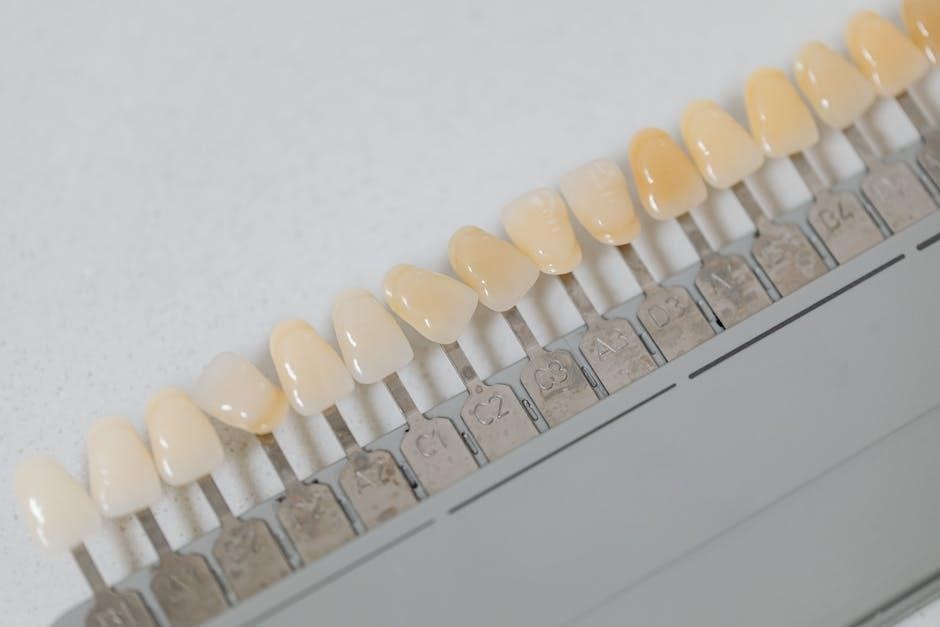
The journey to restoring a smile with dentures involves more than just replacing missing teeth; it’s about recreating a natural, functional, and aesthetically pleasing appearance. Central to achieving this is the careful selection of denture tooth shapes. Historically, dentures were often characterized by a uniform, somewhat artificial look. However, modern dentistry recognizes the significant psychological impact of tooth loss – feelings of self-consciousness, shame, and even fear – and strives to mitigate these through lifelike prosthetics.

Tooth shape profoundly influences facial support, speech, and overall aesthetics. Understanding the various shapes available – from traditional anatomic forms to contemporary tapered and ovoid designs – is crucial for both dental professionals and patients. The evolution of denture technology, including 3D printing and digital design, now allows for unprecedented customization, ensuring a comfortable and confident smile for everyone.

The Psychological Impact of Tooth Loss & Dentures

Tooth loss extends far beyond a functional issue; it carries a significant emotional weight for many individuals. Recent studies, like those from the University of Sheffield, reveal that patients often experience feelings of self-consciousness, shame, or fear following tooth loss, impacting their quality of life. These emotional challenges can affect social interactions, dietary habits, and overall self-esteem.

Dentures, while offering a solution, aren’t simply replacements; they represent a restoration of confidence. However, the success of dentures in addressing these psychological impacts hinges on their natural appearance and comfortable fit. A well-designed denture, with carefully selected tooth shapes, can minimize feelings of artificiality and help patients regain a sense of normalcy and self-assurance, ultimately improving their psychological well-being.

Understanding Denture Base Materials

The foundation of any denture, and a crucial element supporting optimal tooth shape integration, lies in the base material. Traditionally, acrylic resins have been the standard, offering a balance of affordability and ease of modification. However, modern advancements introduce alternative materials like flexible resins, providing enhanced comfort and improved fit, particularly for patients with sensitivities.

Material choice directly influences denture design possibilities. Acrylic allows for straightforward adjustments to accommodate specific tooth shapes and bite alignments. While full dentures covering the entire palate are still common, newer materials enable designs with reduced coverage, enhancing taste and sensation. Understanding these material properties is vital for creating dentures that not only look natural but also function seamlessly with the chosen tooth shapes.

Traditional Denture Tooth Shapes

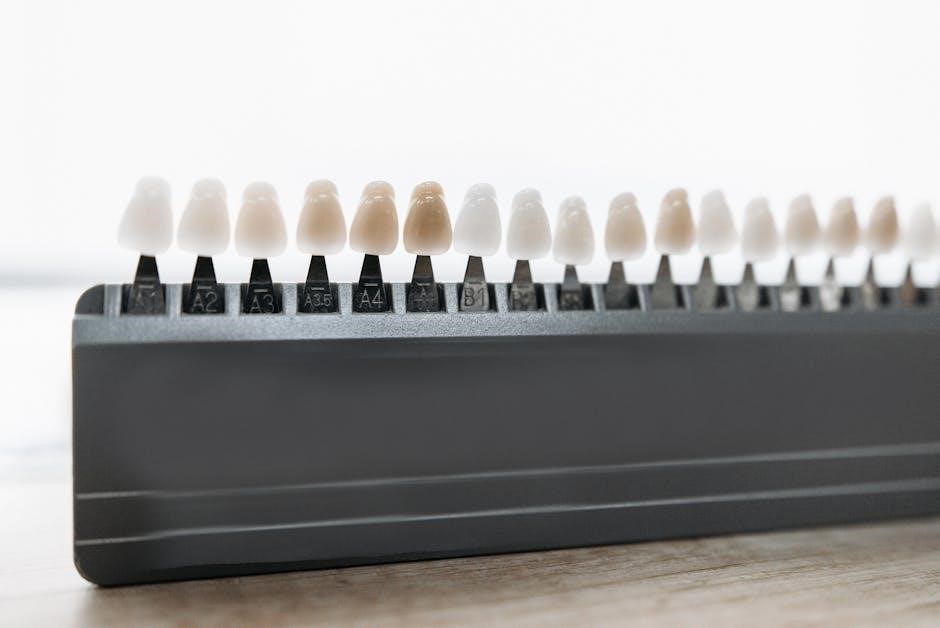
Classic designs historically featured anatomic, square, tapered, and ovoid forms, aiming for a natural appearance and functional bite, though aesthetics varied considerably.

Anatomic Tooth Shapes

Anatomic denture teeth meticulously replicate the natural form and characteristics of real teeth, featuring distinct cusps, grooves, and anatomical landmarks. These shapes prioritize a lifelike appearance and aim to mimic the function of natural dentition as closely as possible. Historically, they were a standard choice, favored for their perceived naturalism and ability to integrate with existing oral structures.

However, achieving optimal function with purely anatomic shapes can sometimes be challenging, particularly in cases of significant bite discrepancies or limited interocclusal space; Careful consideration must be given to occlusal harmony and proper articulation during the denture fabrication process. While offering excellent aesthetics, they may require more adjustments to ensure comfortable chewing and prevent excessive stress on the jaw joints. Modern advancements are often combined with anatomic forms to enhance both function and appearance.

Non-Anatomic Tooth Shapes

Non-anatomic denture teeth deviate from the precise replication of natural tooth form, presenting simplified shapes with fewer cusps and grooves. These designs prioritize function and ease of articulation over strict aesthetic realism. They are often favored when dealing with reduced interocclusal space or challenging bite relationships, as their smoother surfaces require less vertical dimension.

Historically, non-anatomic shapes were popular for their ease of fabrication and reduced adjustment requirements. While they may not possess the same level of lifelike detail as anatomic teeth, modern materials and techniques allow for surprisingly natural-looking results. They can be particularly beneficial for patients experiencing difficulties with chewing or jaw discomfort, offering a more comfortable and efficient bite. Combining these shapes with advanced denture base materials can yield excellent functional outcomes.

Square Tooth Shapes

Square tooth shapes in dentures feature flat occlusal surfaces and straight, defined edges, creating a robust and stable biting platform. These shapes are characterized by their lack of pronounced cusps or tapering, offering a broad contact area for efficient food processing. Historically, square teeth were frequently utilized, particularly in complete dentures, due to their ease of fabrication and predictable function.

While perhaps less aesthetically refined than other options, square teeth excel in providing a secure and confident bite, especially for patients with limited interocclusal space. They distribute chewing forces evenly, minimizing stress on the denture base and underlying tissues. Modern advancements allow for subtle modifications to square shapes, softening edges for improved aesthetics without compromising functionality. Careful consideration of facial form and patient needs is crucial when selecting this shape.

Tapered Tooth Shapes

Tapered denture teeth mimic the natural contours of youthful dentition, featuring gradually narrowing incisal and cuspal edges. This design promotes a more natural appearance and enhances aesthetics, particularly in the anterior region. The tapering creates a softer, more organic look, blending seamlessly with the surrounding facial tissues and lip support.

Functionally, tapered teeth guide food into proper occlusion, facilitating efficient chewing and reducing strain on the temporomandibular joint. They offer a balanced combination of form and function, suitable for a wide range of patients. Modern materials and manufacturing techniques allow for precise control over the degree of taper, customizing the shape to individual needs. These shapes are often favored when restoring a natural, youthful smile and optimizing bite stability.

Ovoid Tooth Shapes

Ovoid denture teeth present a rounded, elliptical form, offering a softer and more gentle aesthetic compared to sharper, more angular designs. This shape is particularly beneficial for patients experiencing significant lip support loss, as the rounded contours provide a fuller, more youthful appearance. The smooth transitions of ovoid teeth minimize harsh lines and create a harmonious blend with the facial profile.

From a functional perspective, ovoid shapes distribute chewing forces more evenly across the denture base, reducing stress on the underlying tissues. They are often preferred for patients with limited interocclusal space or those seeking a comfortable, natural-feeling bite. Contemporary advancements in denture design allow for precise customization of ovoid tooth dimensions, ensuring optimal aesthetics and function tailored to each individual’s unique needs.

Modern Advancements in Denture Tooth Design

Innovative technologies, including 3D printing and digital design, are transforming dentures, offering enhanced customization, precision, and material options for improved fit and aesthetics.

3D Printed Denture Teeth

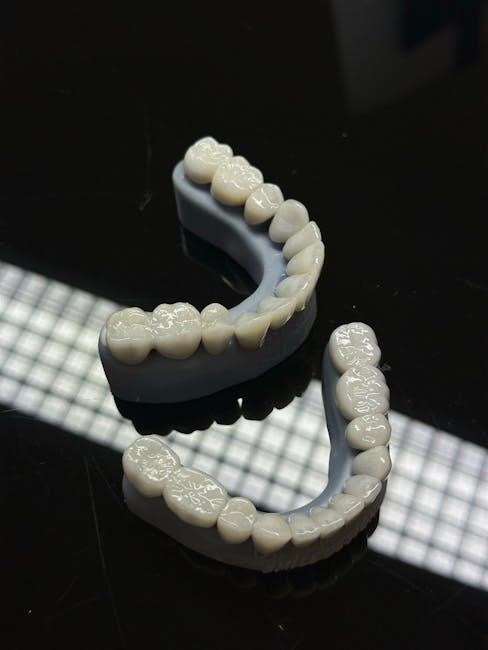
The advent of 3D printing represents a significant leap forward in denture technology. Traditionally, dentures were crafted using time-consuming manual processes, often resulting in variations and limitations in precision. Now, 3D printing allows for the creation of highly accurate and customized denture teeth, directly from digital designs.

This technology enables dental professionals to fabricate dentures with intricate details and optimized shapes, tailored to each patient’s unique oral anatomy. The process involves using specialized materials, like acrylic resins, which are layered precisely to build the desired tooth structure. Benefits include reduced manufacturing time, improved fit, enhanced aesthetics, and the potential for more affordable dentures.

Furthermore, 3D printing facilitates the creation of complex designs that were previously difficult or impossible to achieve with conventional methods. This opens up possibilities for personalized denture solutions, addressing individual patient needs and preferences with greater accuracy and efficiency. The future of dentures is undeniably linked to the continued development and refinement of 3D printing technologies.

Digital Denture Design & Customization

Modern denture fabrication increasingly relies on digital workflows, transforming the process from largely manual to highly precise and customizable. Digital denture design begins with capturing a detailed scan of the patient’s mouth, creating a virtual model of their oral tissues; This scan serves as the foundation for designing the denture base and selecting appropriate tooth shapes and arrangements.

Sophisticated software allows dental technicians to manipulate the design, adjusting tooth positioning, contours, and shades to achieve optimal aesthetics and function. Patients can even preview the final result before fabrication, ensuring satisfaction with the appearance. This level of customization was previously unattainable with traditional methods.

Digital design also streamlines the manufacturing process, often integrating seamlessly with 3D printing or milling technologies. The result is dentures that fit more comfortably, look more natural, and meet the unique needs of each individual, representing a significant advancement in restorative dentistry.

Materials Used in Modern Denture Teeth (Acrylic, Porcelain, Composite)

Contemporary dentures utilize a range of materials beyond traditional options, each offering distinct advantages. Acrylic remains a popular choice due to its affordability, ease of processing, and ability to mimic natural gum tissues. However, it’s less resistant to wear than other materials.

Porcelain teeth, known for their exceptional aesthetics and durability, provide a lifelike appearance and resist staining effectively. They are, however, more brittle and can cause wear on opposing natural teeth. Composite resin teeth represent a middle ground, offering a balance of aesthetics, durability, and affordability.

Recent advancements include newer acrylic formulations with improved wear resistance and composite materials designed to closely replicate the translucency of natural teeth. The selection of material depends on factors like patient budget, aesthetic preferences, and functional demands, ensuring optimal denture performance.

Factors Influencing Tooth Shape Selection

Careful consideration of facial structure, patient age, and existing dentition are crucial for selecting appropriate tooth shapes, alongside achieving proper bite alignment.

Facial Structure & Lip Support

The relationship between denture tooth shape and facial aesthetics is profoundly significant. A well-chosen tooth shape directly impacts lip support, preventing the sunken appearance often associated with tooth loss and traditional dentures. Analyzing a patient’s facial structure – including the jawline, chin prominence, and overall symmetry – is paramount.

Anatomic tooth shapes, mimicking natural teeth, generally provide better lip support, restoring facial volume and a more youthful profile. Conversely, non-anatomic shapes might require adjustments to the denture base to compensate for reduced support. The goal is to recreate the natural contours of the face, enhancing the patient’s confidence and overall appearance.

Furthermore, understanding how the teeth interact with the lips during speech and smiling is vital. Incorrect tooth shape can lead to whistling or difficulty articulating certain sounds. A comprehensive assessment ensures both functional and aesthetic harmony.

Patient’s Age & Existing Dentition

Considering a patient’s age and the condition of their remaining teeth – if any – is crucial when selecting denture tooth shapes. Younger patients often benefit from more natural, anatomic shapes that blend seamlessly with their existing dentition, preserving a youthful appearance. For those with significant wear on remaining teeth, replicating the original contours might be desirable.

Older patients, who may have experienced more extensive tooth loss and facial changes, might require different considerations. Shapes offering enhanced lip support and improved chewing efficiency become paramount. The psychological impact of tooth loss, as recent studies show, can be significant, influencing aesthetic preferences.

Existing dentition also informs the choice between tapered, ovoid, or square shapes. Matching the overall aesthetic of the remaining teeth ensures a harmonious and natural-looking result. Careful evaluation prevents a jarring contrast and promotes patient satisfaction.

Occlusion & Bite Alignment

Achieving proper occlusion and bite alignment is paramount when selecting denture tooth shapes. The chosen shapes must facilitate a balanced bite, preventing undue stress on the jaw joints and surrounding tissues. Incorrect alignment can lead to discomfort, difficulty chewing, and even temporomandibular joint (TMJ) disorders.

Anatomic tooth shapes often lend themselves well to natural occlusion, mimicking the function of natural teeth. However, adjustments may be necessary based on the patient’s unique bite. Modern advancements, like digital denture design, allow for precise customization of tooth positioning and occlusal surfaces.

Careful consideration must be given to the curvature of the occlusal plane and the relationships between upper and lower teeth. A well-designed occlusion ensures efficient chewing, speech clarity, and a comfortable, stable denture. Recent research emphasizes the importance of patient comfort alongside aesthetics.

Specific Tooth Shape Considerations

Anterior teeth impact aesthetics, while posterior shapes prioritize function; modern dentures, even 3D printed ones, require careful shape selection for optimal results.

Anterior Tooth Shapes (Incisors & Canines)

The shape of anterior teeth – incisors and canines – profoundly influences a patient’s smile aesthetics and perceived age. Traditionally, incisor shapes ranged from square and tapered to ovoid, each creating a distinct visual effect. Square shapes often project a youthful appearance, while tapered shapes can soften facial features. Ovoid shapes offer a more natural, rounded look.

However, modern advancements allow for greater customization. Digital denture design enables precise replication of existing dentition or creation of entirely new, aesthetically pleasing shapes. Considerations extend beyond mere form; the length, width, and arrangement of these teeth significantly impact lip support and facial harmony. Patients experiencing self-consciousness or shame related to tooth loss benefit from carefully selected shapes that restore confidence and a natural smile. The goal is to achieve a balanced and harmonious appearance, reflecting the patient’s individual preferences and facial structure.

Posterior Tooth Shapes (Premolars & Molars)

While less visually prominent than anterior teeth, the shapes of premolars and molars are crucial for functional denture success. These posterior teeth primarily handle chewing forces, demanding shapes that facilitate efficient grinding and bolus preparation. Traditionally, these teeth featured more robust, cusp-shaped designs to maximize surface area and grip during mastication.

Modern denture design, including 3D printed options, allows for nuanced adjustments to posterior tooth morphology. Digital customization can optimize occlusal surfaces for improved bite alignment and reduced stress on the temporomandibular joint. The selection considers the patient’s existing bite, facial structure, and any remaining natural teeth. Proper posterior tooth shape is vital for preventing denture instability and ensuring comfortable, effective chewing, ultimately contributing to overall patient satisfaction and well-being, addressing physical sensations related to tooth loss.

The Role of Tooth Shape in Aesthetics

Tooth shape profoundly impacts a denture wearer’s appearance and self-confidence. Beyond simply replacing missing teeth, carefully selected shapes harmonize with facial contours, restoring lip support and a natural smile line. Patients often experience self-consciousness and shame following tooth loss; aesthetic dentures directly address these emotional challenges.

Anterior tooth shapes, particularly incisors and canines, are paramount in creating a youthful and pleasing aesthetic. Modern advancements, like digital denture design, allow for highly customized shapes, mimicking natural dentition. The goal is to avoid a “denture look” by replicating subtle variations in tooth form and arrangement. Considering the psychological impact, a well-designed denture can significantly improve a patient’s quality of life, reducing feelings of fear and restoring a positive self-image, even with 3D printed options.

Maintaining Denture Tooth Shape & Function

Regular dental check-ups and diligent cleaning are crucial for preserving denture integrity, addressing adjustments, and ensuring continued aesthetic appeal and functional performance.

Proper Denture Care & Cleaning

Maintaining optimal denture hygiene is paramount for both oral health and the longevity of the appliance. Daily cleaning removes food particles, plaque, and stains that can accumulate, leading to odor and potential irritation. Dentures should be brushed at least twice daily using a soft-bristled brush and a specialized denture cleanser – avoiding regular toothpaste, as it’s abrasive and can damage the acrylic or porcelain.

Soaking dentures overnight in a denture-cleaning solution is also essential. This helps maintain their shape and prevents dryness. When not wearing dentures, they should always be stored in water or a denture solution to prevent warping. Avoid hot water, which can distort the denture base. Regular professional cleaning and polishing by a dentist are vital to remove stubborn stains and ensure a proper fit, contributing to overall denture function and aesthetic appeal.

Regular Dental Check-ups & Adjustments

Consistent professional dental visits are crucial, even with dentures, to monitor oral health and denture fit. The mouth changes over time, necessitating periodic adjustments to ensure continued comfort and functionality. Dentists can identify and address issues like sore spots, ill-fitting areas, or changes in bite alignment that can develop with denture wear.

These check-ups also allow for early detection of oral pathologies, such as oral cancer, which can be more challenging to identify in denture wearers. Denture adjustments, relining, or even replacement may be required to maintain optimal performance. A dentist can assess the denture tooth shape and provide guidance on maintaining aesthetics and preventing future problems, ensuring long-term satisfaction and oral wellbeing.